When working on a building, one of the most important considerations to make is the preservation of its original aesthetic so that the historical essence of the building is not lost. The visual components of a building are sometimes what make it so different when compared to others, a quality that also makes it unique and special – and if the building is listed, then this is even more necessary since a major change can make it lose its status.
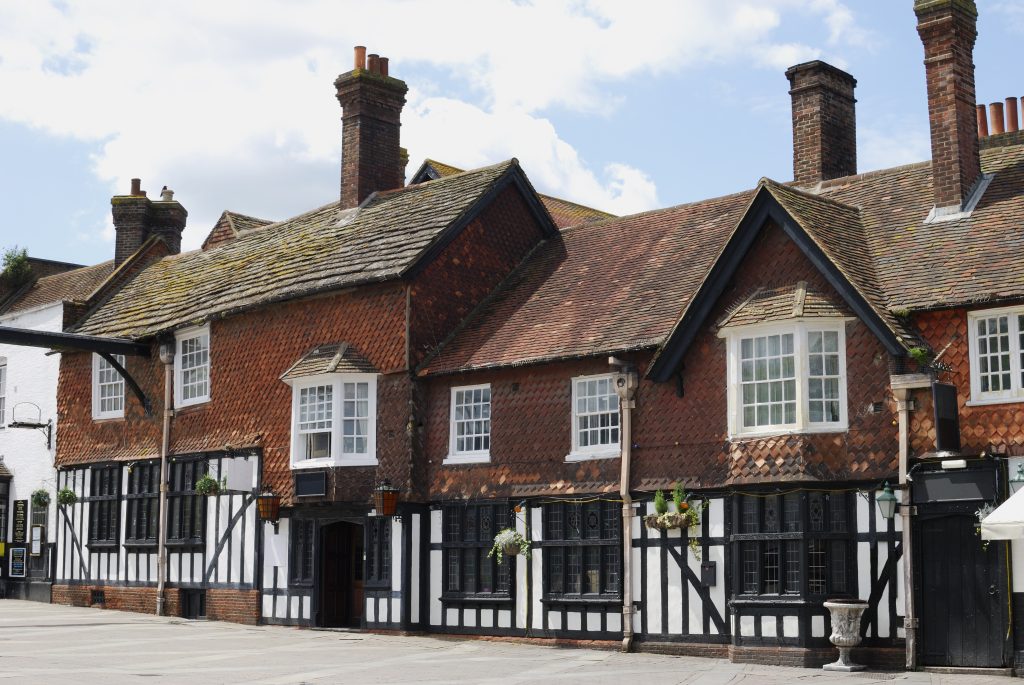
When carrying out new work, such as building extensions or modifications, it’s crucial to keep in mind that the old and the new should look the same as if the same architects and designers did them.
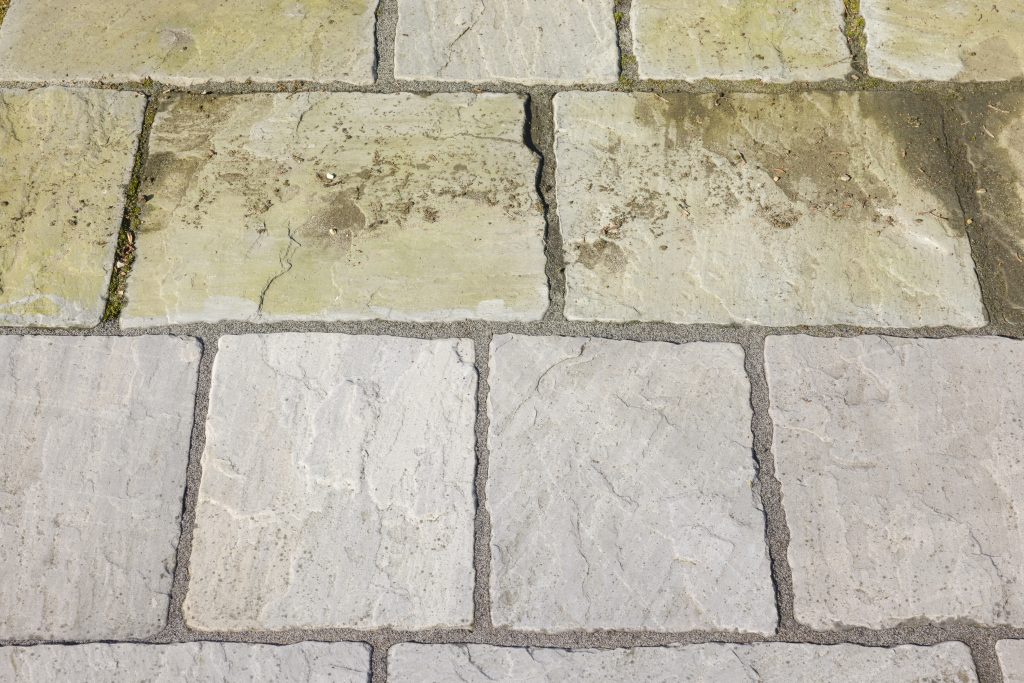
Take flooring, for example. When replacing the original flooring in a traditional building, it is of paramount importance for the new floor to reflect the colour, texture and finish of the old stone. Many traditional buildings in the UK may have used flooring from local sources when originally constructed, which may no longer be available or accessible today. Many native slate quarries are still operational today, e.g. Welsh or Cumbrian sources; however, you may find your project’s budget will become strained by the cost of these premium materials.
But worry not! There are many cost-effective alternatives to these materials that are visually sympathetic and available in a range of finishes, making it even easier to match the original.
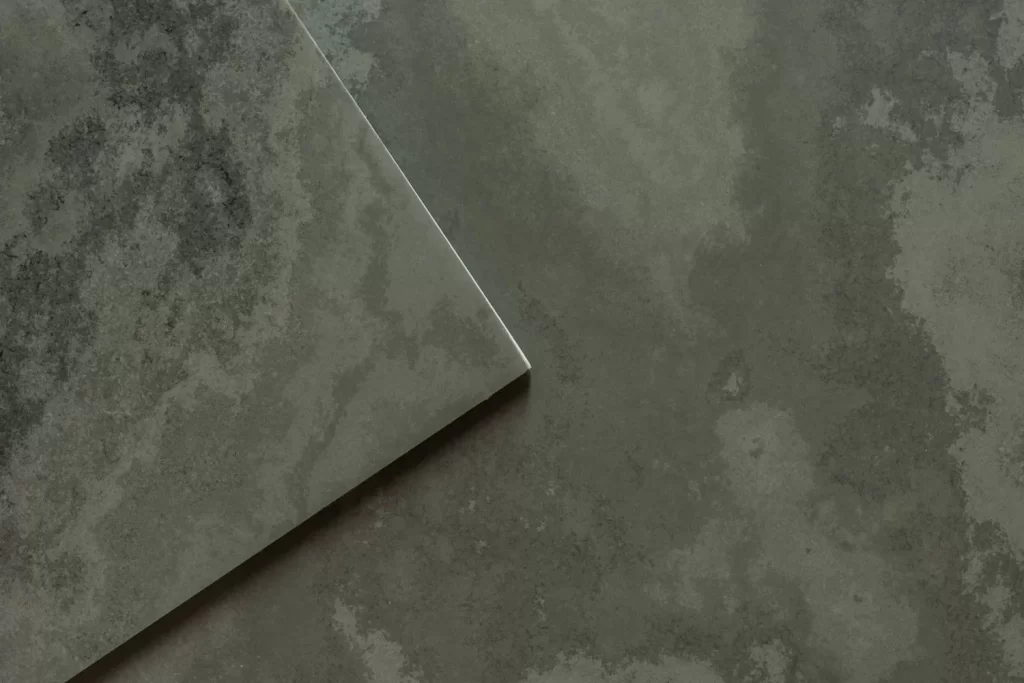
Our Ravendale® and Elterdale® flooring ranges are available in a tumbled finish, which would be excellently suited to flooring projects that aim to be authentic to the worn, aged appearance of old flagstones. The gently chipped and rounded edges resemble a floor which has tolerated decades of wear and tear. The Ravendale® and Elterdale® colours provide cost-effective alternatives to Welsh Dark Blue Grey and Cumbrian Green slates, respectively.
Slate’s natural beauty is not solely in its appearance. The stone exhibits a unique range of hues—from the deep, evocative Welsh Dark Blue Grey to the rich, earthy tones of Cumbrian Green—which are the result of its geological origins. The naturally occurring grain lines and textured surface, often enhanced by tumbled finishes, perfectly mirror the centuries of weathering seen in traditional structures.
Utilise digital colour-matching tools to ensure that new materials accurately replicate the hues of the original slate and factor in potential lead times from quarries or suppliers. Consulting with architects experienced in heritage restoration will further ensure that every detail—from flooring to roofing—resonates with the building’s historic essence.

In order to preserve the original aesthetic, architects and builders should first understand what the heart of the design is so as to be able to adapt to each building’s needs and maintain its integrity. Once established, a project that intends to preserve the aesthetic instead of a complete renovation should change as little as possible. Major structural modifications should be avoided, as they would completely alter the design.
This means that any changes, internal or external, should be minimal and necessary. If your flooring project does not entail the removal of the entire flooring surface in a given space but instead patchwork where flooring may be damaged, then it would be advised that like-for-like materials are sourced prior to the removal of any original flooring. This would also allow for planning around long availability lead times.
It is also worth recognising that slate has been a cornerstone of UK architecture since medieval times. From the majestic facades of historic castles to the enduring roofs of venerable churches, slate not only preserves historical accuracy by mirroring original quarry sources but also embodies traditional craftsmanship through age-old splitting techniques.

Beyond flooring, slate’s versatility supports a range of restoration applications. Its inherent durability and weatherproof qualities make it ideal not only for roofing but also for external cladding, landscaping elements such as garden paths or patios, and even interior detailing like fireplaces and worktops. By utilising slate in these diverse applications, one can ensure that every facet of a building remains true to its historical narrative while benefiting from modern durability and sustainability.
It is clear that the only way to guarantee the preservation of a building’s aesthetic while conducting new work is through tailored solutions. It’s important to remember that there is generally not a one-size-fits-all remedy and that detailed research and design are the keys to success.
When considering cost, it is essential to note that while natural slate is a premium product, its longevity—often exceeding a 100-year lifespan—renders it a cost-effective choice in the long run. Moreover, slate boasts one of the lowest carbon footprints among roofing materials due to its minimal processing and 100% recyclability. For projects with tighter budgets, alternatives such as our Ravendale® and Elterdale® ranges offer a visually compatible and sustainable solution without compromising on historical integrity. If you require any advice or guidance with regard to a restoration project, please do not hesitate to contact our staff; their expertise will guide you through the process of your project. You can also find us on Facebook or LinkedIn, so head over and check out our projects in more detail.
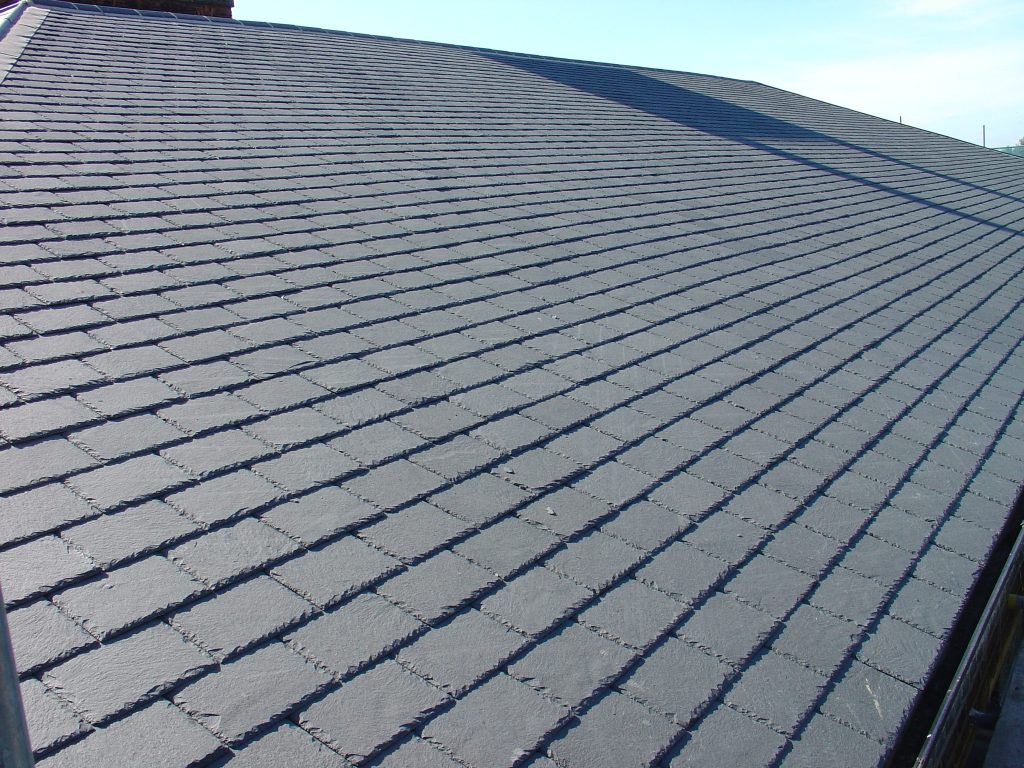
We are delighted to announce the arrival of the Burlington Blue Grey Best Slate, now available at UK Slate. This remarkable slate, sourced from the heart of England’s Lake District, is celebrated as one of the finest slates in the world. Renowned for its striking blue-grey hue and superior quality, it’s the perfect choice for premium projects where only the best will do.
The Burlington Blue Grey Best Slate is available from stock in two versatile options:
Sold by the tonne, with a variety of crate sizes in stock, this slate is ideal for projects requiring flexibility and precision.
The unique qualities of Burlington Blue Grey Slate have made it the choice of architects, designers, and builders for centuries. Its durability and timeless aesthetic elevate both modern and traditional projects. Each piece undergoes rigorous testing to meet BSEN12326-1:2004 standards, achieving A1, T1, and S1 certification, ensuring its strength, water resistance, and thermal performance.
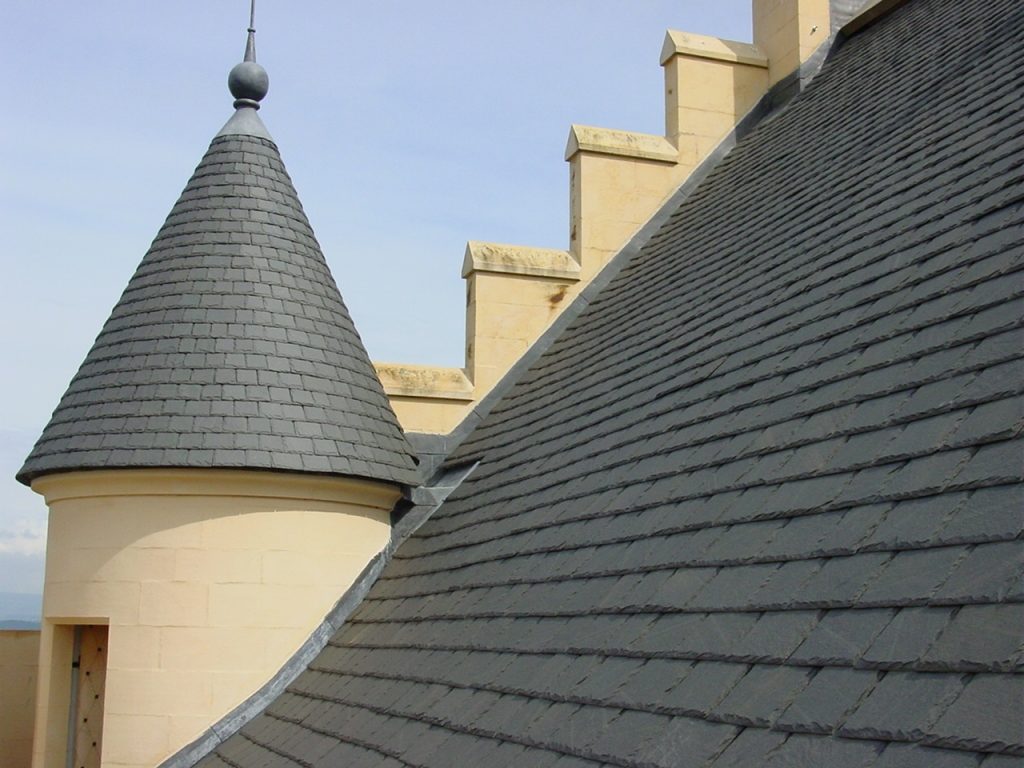
Burlington Blue Grey Best Slate is not just a roofing material; it’s a statement of quality and heritage. Its versatility makes it suitable for:
As a registered stockist of Burlington products, UK Slate is proud to offer not just the Blue Grey Best Slate, but also a full range of Burlington slates, including the renowned Westmorland Green slate. Whether your project requires roofing, architectural elements, or aggregate materials, we are your trusted source for premium Burlington slate.
When choosing materials for your project, nothing compares to the blend of heritage, beauty, and performance that Burlington Blue Grey Slate offers. Its origins in the historic Lake District lend it a character and prestige that other materials simply cannot replicate.
If you’re ready to elevate your next project with the finest slate in the world, contact us today. Let’s discuss how Burlington Blue Grey Best Slate can bring your vision to life.
We are happy to announce the arrival of our Ravendale® 9-11mm Blue Grey Slate, now in stock here in the UK. This premium slate combines strength, durability, and timeless aesthetics, making it an excellent choice for roofing projects of any size.
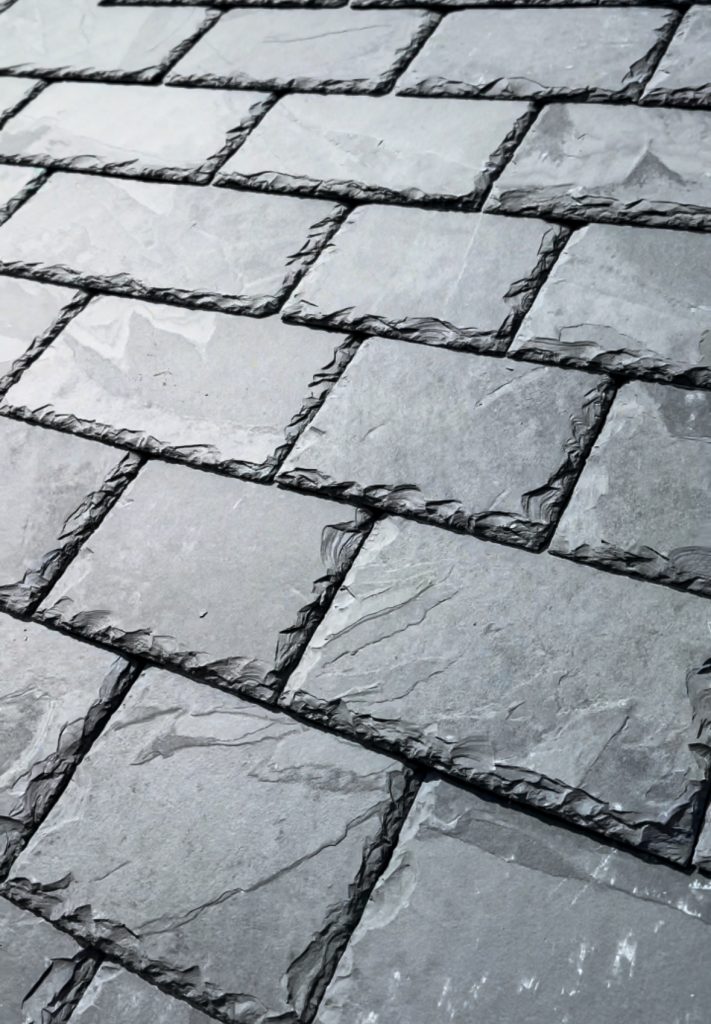
Created in collaboration with our trusted quarry partners in Brazil, the Ravendale® Blue Grey Slate delivers exceptional quality and consistency. Sourced from a select section of the Black Slate quarry in the Paraopeba Valley near Papagaios, Brazil, this slate is celebrated for its outstanding stone. By producing the Ravendale® exclusively in a 9-11mm thickness, we ensure that each piece meets the highest standards of durability and performance.
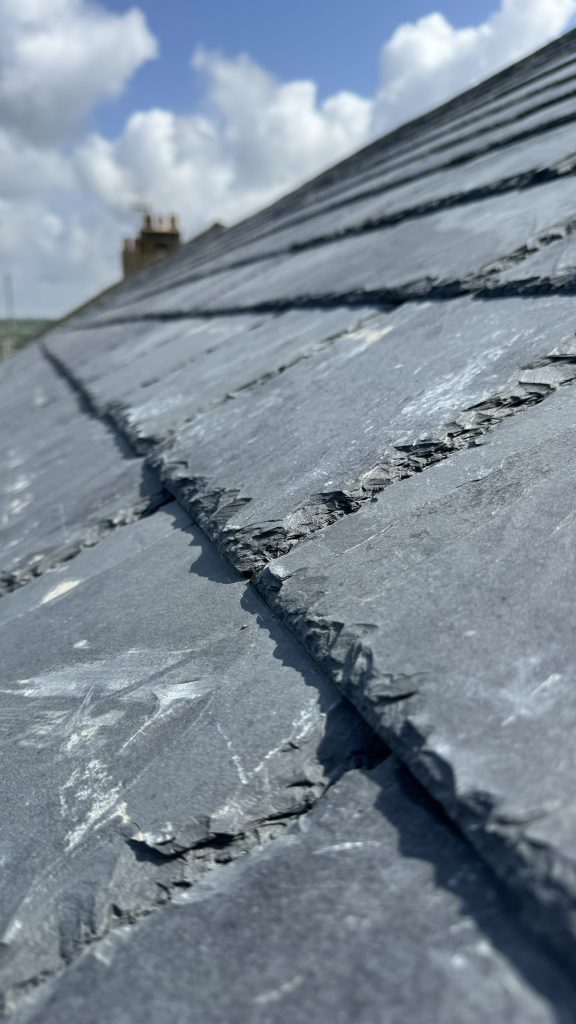
We have a very close relationship with our Quarry partners in Brazil, this ensures we maintain unparalleled control over the quality and integrity of the product. In fact, Ravendale® slate is sourced only from the finest areas of the quarry, ensuring a denser, stronger product that will stand the test of time.
The Ravendale® Blue Grey Slate is available in a range of sizes to meet the diverse needs of our customers:
Whether you’re working on a modern project or a traditional design, these size options ensure flexibility and compatibility for any roofing requirement.
The blue-grey colour of the Ravendale® slate is a striking and cost-effective alternative to higher-specification slates such as Burlington or Welsh slate. While offering a similar aesthetic and performance, the Ravendale® delivers exceptional value, making it a popular choice among professionals and homeowners alike.
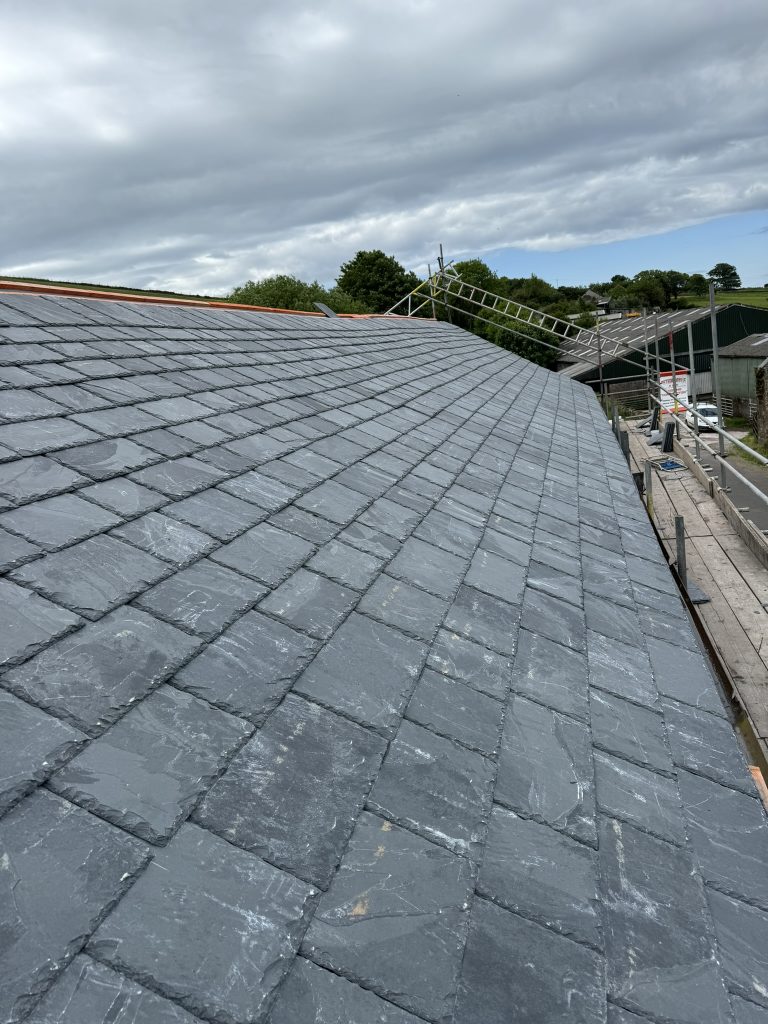
The Brazilian slate industry has emerged as one of the leading global suppliers of natural roofing slate, and the Ravendale® Blue Grey is no exception. Backed by well-regarded international quarrying and production facilities, this slate is manufactured with precision and an unwavering commitment to quality.
Every Ravendale® slate undergoes rigorous testing to ensure it meets British and European standards. It is fully certified to BS EN12326-1:2004, attaining A1, T1, and S1 ratings for strength, thermal resistance, and water absorption. These certifications provide confidence that the slate will deliver long-term reliability, even in challenging UK weather conditions.
At UK Slate, we take pride in offering products that reflect our values of transparency, reliability, and quality. Our direct partnerships with quarry owners provide full visibility into the supply chain, ensuring that you can trust the origin and integrity of every piece of Ravendale® slate.
Our experienced team, based in the heart of the Lake District, is here to help you make the right choice for your roofing needs. With a team that carries many decades of combined expertise, we’re always happy to provide advice, answer questions, and guide you through the selection process.
To discuss your project and request a quote, please get in touch with us. We’ll be happy to provide a tailored solution to meet your needs. Discover the benefits of the Ravendale® Blue Grey Slate and elevate your next roofing project with this exceptional product.
Natural slate is a material that has been embraced as a way to improve any premises, whether it be with landscaping, roofing or interior improvements. Few materials will surpass the inherent beauty of natural slate tiles, and it’s not even limited to domestic uses only.
Using slate, whether in your home or commercial property, can give you a lot of benefits. After all, this stone can be used for the outside, such as for the exterior walls of your home or the roof, or indoors to create a beautiful design you can be proud of at all times.
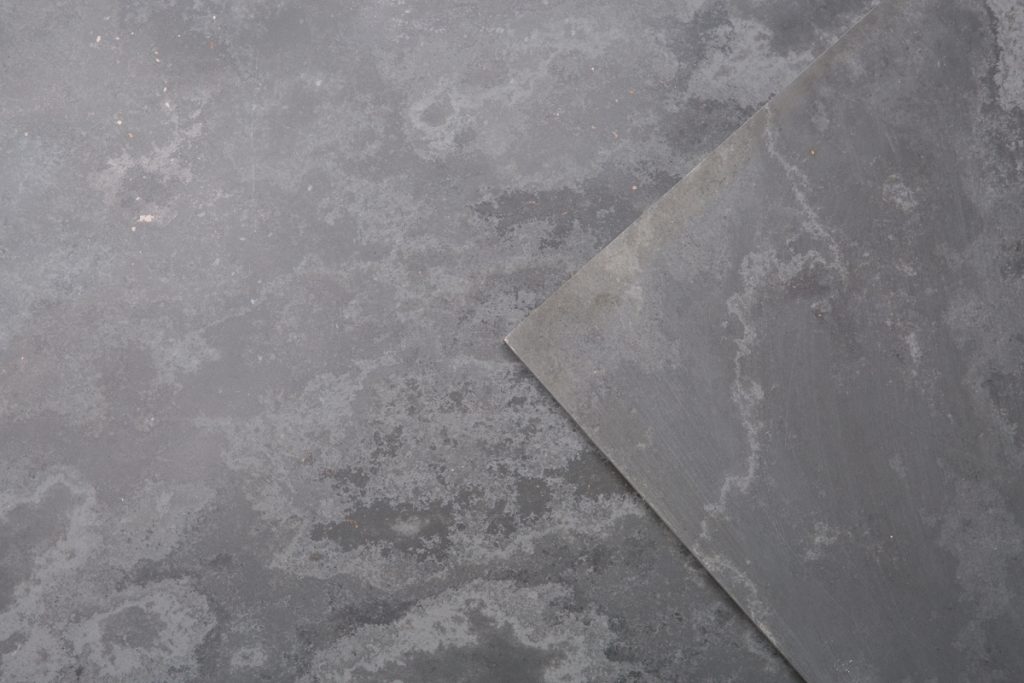
Slate is a highly versatile stone capable of being used in an extensive range of applications, and it’s widely regarded as a natural stone that offers sophistication and style to any design. One of slate’s most remarkable features is its ability to be adapted and worked to your specific needs, meaning you can add a unique, authentic look to your home or business if you opt to use this natural stone.
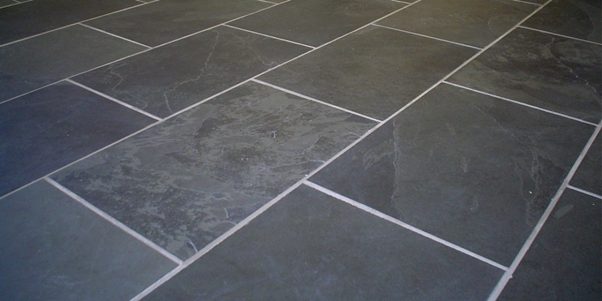
At UK slate, we embrace the beauty that natural slate provides while working to ensure that our customers are able to implement their slating in the exact way they wish. There are plenty of options when choosing a natural slate. This versatile material can be manipulated into many sizes and be supplied in a variety of colours.
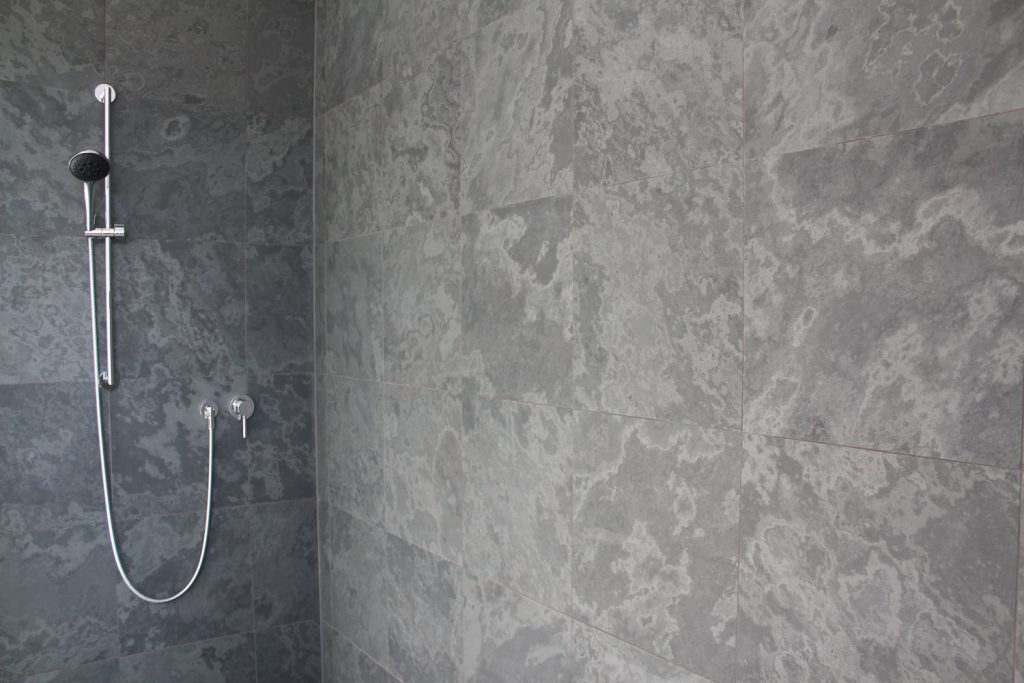
When the tiles are machined to a honed flat finish, the process involved cuts through the minute undulating layers within the slate and can create a billowing cloud effect. This is because the honing procedure enhances the variations of shade within the stone, sometimes leaving plain tiles, other times beautiful swirling patterns that are unique to each tile. This flexibility is perfect for creating a wide array of designs, whether you intend for them to lean towards the traditional or the contemporary style.
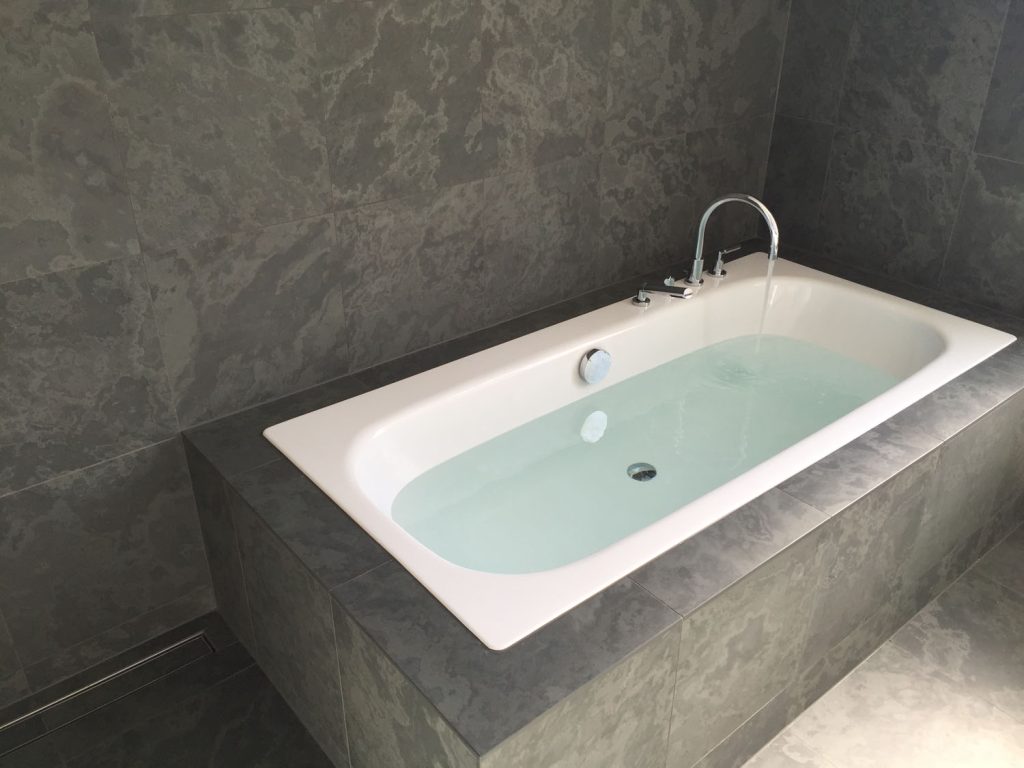
We used Elterdale Grey Green Honed Slate in a 400mm x 400mm format so that the tiles, both on the shower walls and the bathing area, had a smooth, matt surface with natural colour variations to them. For the base of the shower area, they used the same Elterdale Grey Green slate but in a Riven finish, which has a natural hand-split texture. This was to give a contrast to the different areas within the room but also to provide a safe, slip-resistant finish underfoot.
In order to meet the client’s very specific requirements and timescales we decided to take advantage of slate’s inherent properties, such as its durability and versatility, we ensured that the bathroom would be completely unique in appearance. We also hand-produced special rounded edge tiles for around the inset bath surround. Therefore ensuring a unique finished effect whilst providing clean and safe edges around the inset bath.
Slate can be tailored to fit your particular project. It also allows you to choose between an extensive range of styles, as well as shapes and forms, and be guaranteed a stunning and unique design. If you’d like to learn more about our bespoke slate ware and how it can benefit interior spaces such as a bathroom or a roof with our durable ridge tiles, or our Vermont slates, feel free to talk to us on 015395 59289. You can also speak to us to find out more about how our various slates could improve your existing premises.
Slate is an excellent material for your roof tiles. When maintained, it can not only protect your roof but look great at the same time.
So, Learning how to lay slate roof tiles is an important skill when repairing or replacing a slate roof; and, if done correctly, will save you time and money on your roof maintenance. Please read our following guide to learn everything you need to know about laying slate roof tiles. Laying a slate roof can seem like a daunting job, but with careful patience and suitable materials, it can be done efficiently and to a high standard. There are three main steps to follow:
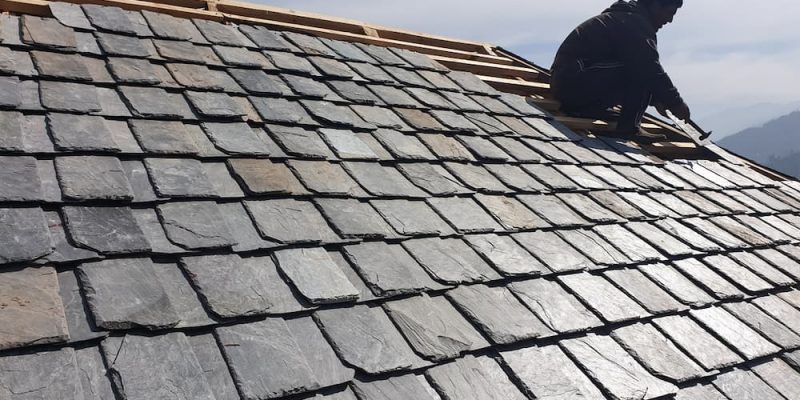
When conducting any roof maintenance, you should always be aware of correct safety procedures. Performing home maintenance without regard for proper safety is a dangerous idea that could lead to personal injury or at least cause more damage to your home.
When working with Roof Slates, you should take time to put protections in place. Scaffolding is the best access method, but keeping the ladder fixed firmly to the side of the house will do if you’re only repairing a small section of your roof. An additional hook ladder would be helpful, but this will be explained later. Having a volunteer spot the bottom of the ladder while you work is essential.
Find some adequate clothing and footwear. Rubber-soled shoes and thick gloves are a good start. In addition, wearing a hard hat and a coat with thick sleeves will give you the best protection in case of any accidents. Purchasing some plastic goggles will also give you excellent eye protection when working with slate.
Slate tiles are incredibly durable but are dangerous to walk across. The slope angle on most roofs means you could easily slip and fall, so you should take care when walking across them. Older slate roofs can be particularly concerning as they may be more fragile.
Having a hook ladder comes in handy here—this type of ladder hooks over the Ridge tiles at the peak of the roof. The hook ladder allows you to distribute your weight between the ladder and the roof. It is essential that you gradually distribute your weight evenly when walking on a roof.

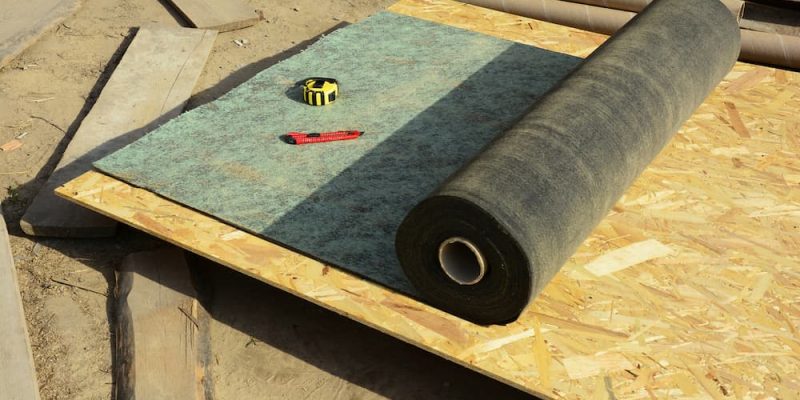
The roof underlay is sometimes referred to as membrane or underlayment. Regardless of the name, they all do the same thing. Essentially your underlay will keep any moisture from penetrating the tiles and entering your building.
You should check the rafters for any old nails or debris that could damage the underlay before your roll it out. Once you are satisfied, you can begin laying your underlay. Start from one side and move across the roof, ensuring it’s flush against the verge. Nailing the start of your roll down will help keep the underlay in place as you move across the roof.
You can nail the underlay again along the middle, but this isn’t strictly necessary. Instead, nail the underlay again once you’ve reached the other side of the roof to secure it in place.
Now you have your underlay in place; you need to place your first battens. You will also need one under eaves slate tile and two full-sized stale tiles to proceed.
Place the battens on the roof but don’t fix them down yet. Then place one of the full-sized slate tiles on the batten and allow a 50mm overhang. Finally, fix the tile to the batten using temporary fixings.
The second batten will go beneath the slate tile near the first batten. Next, place the eaves slate tile into the second batten whilst making sure the eaves slate reaches the bottom edge of the roof.
A third batten is fitted below the top of the slates. Take the other full-sized slate tile and place it centred on the top of the third batten.
By fitting these initial three, you can now calculate your batten gauge. Then, measuring from the top of one batten to the top of the one next, you can figure out where the rest of the battens should go.
To figure out how to set out your tiles correctly, we recommend drawing a chalk line from the ridge to the eaves at the width of every slate. Remember to allow a 5mm gap for the joint between each slate and the battens. This guide will ensure you don’t make incremental mistakes as you make your way across the roof.
It would be best if you lay your under eaves tiles first. Begin with a one-and-a-half slate to create a staggered pattern. Your first fill-length slate should be placed with its tail in line with the under eaves before nailing it in place.
Begin at the bottom and work upwards when placing your slates; bottom right to top left is recommended. This will help you avoid standing on slates as you place them and reduce any risk of slips or breaks.
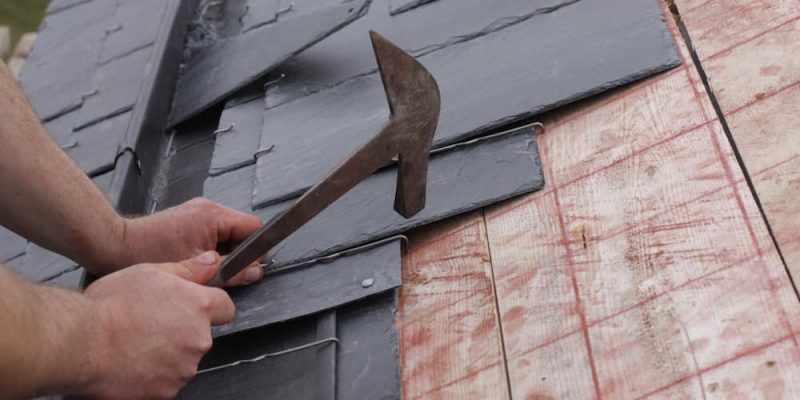
Slate roofs are popular for many reasons, offering a classic aesthetic alongside an impressively durable lifespan. In addition, they can look vintage while being brand new, an excellent choice for buildings in cities or natural landscapes.
At UK Slate, we specialise in offering a fantastic range of natural slate roofing tiles. In addition, we can import North American, Spanish slates, Vermont slates and Welsh roofing slate and many more. So please get in touch with our expert team to discuss how we can help you with your roof slate needs today.
Slate is an aesthetically beautiful stone that has been used in construction for centuries. They make fantastic roof tiles, able to provide excellent insulation for a home and withstand harsh weather conditions, but they can also be used inside the house as floor and wall tiles. Slate comes in a variety of naturally occurring colours and styles, making it an incredibly versatile material.
But where do these slate tiles come from? How do they go from being mined out of the ground to the tiles on our roofs, wall and floors? Well, here’s what you need to know about the step-by-step process or mining this natural, raw material and turning it into the tiles we know and love.
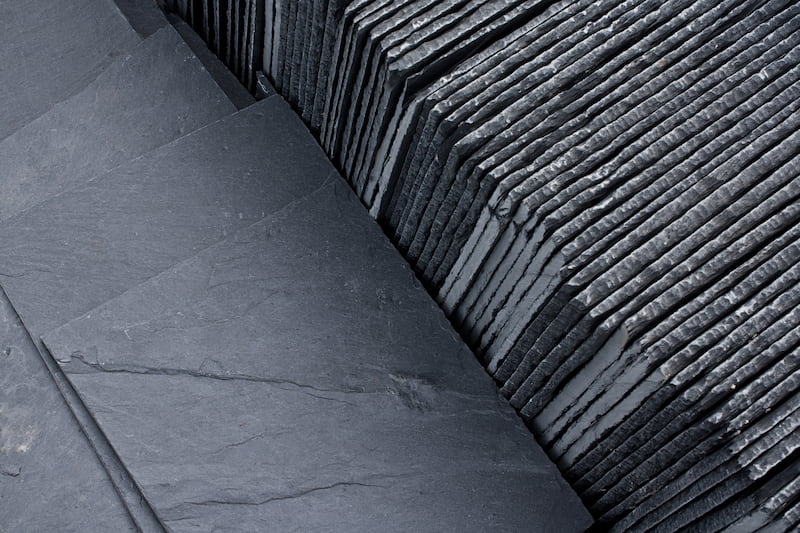
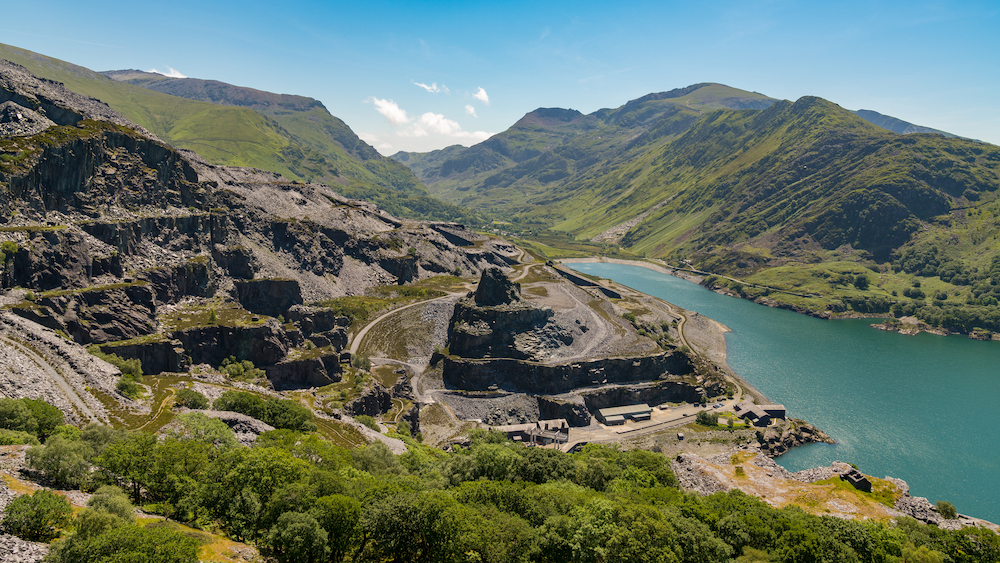
Before the process can begin, quarry sites need to be surveyed and tested to ensure they are appropriate areas to extract the material from. The quarry rocks need to be tested to ensure they are strong enough and suitable for their end-use. The tests are done to discover if there are any weak rock layers that will be detrimental to the stone's end quality.
The stone will only be extracted from the quarry for use when the tests have verified the quality and purity of the slate.
The raw slate is then sawn from the quarry in large flat slabs using a diamond beaded steel cable – or sometimes detonation is used, but this is done at a minimum to keep slabs large and prevent material loss. The extraction must be done carefully and with precision, as the process can affect the material's integrity.
Once the slabs are free, they are transported to factories to transform them into tiles.
Using diamond-tipped blades, the slabs of slate are then cut into more manageable pieces. During this process, impurities are also removed from the raw material without the use of harsh chemicals. The cuts are then inspected for their end-use. Most slate will be used for roofing, while a portion will be allocated for architectural use. Slate destined for architectural use will need to be of the finest quality and have large dimensions.
The slate cuts are then sent for splitting, where they will be split down to a specific thickness, a process which is done by hand. This technical step of the slate processing process has been done for many centuries.
Splitting is a specialist process that splits the slabs into the correct thickness while maintaining the material's integrity. The slabs are split where a natural break occurs in the slab to give it a clean, straight split.
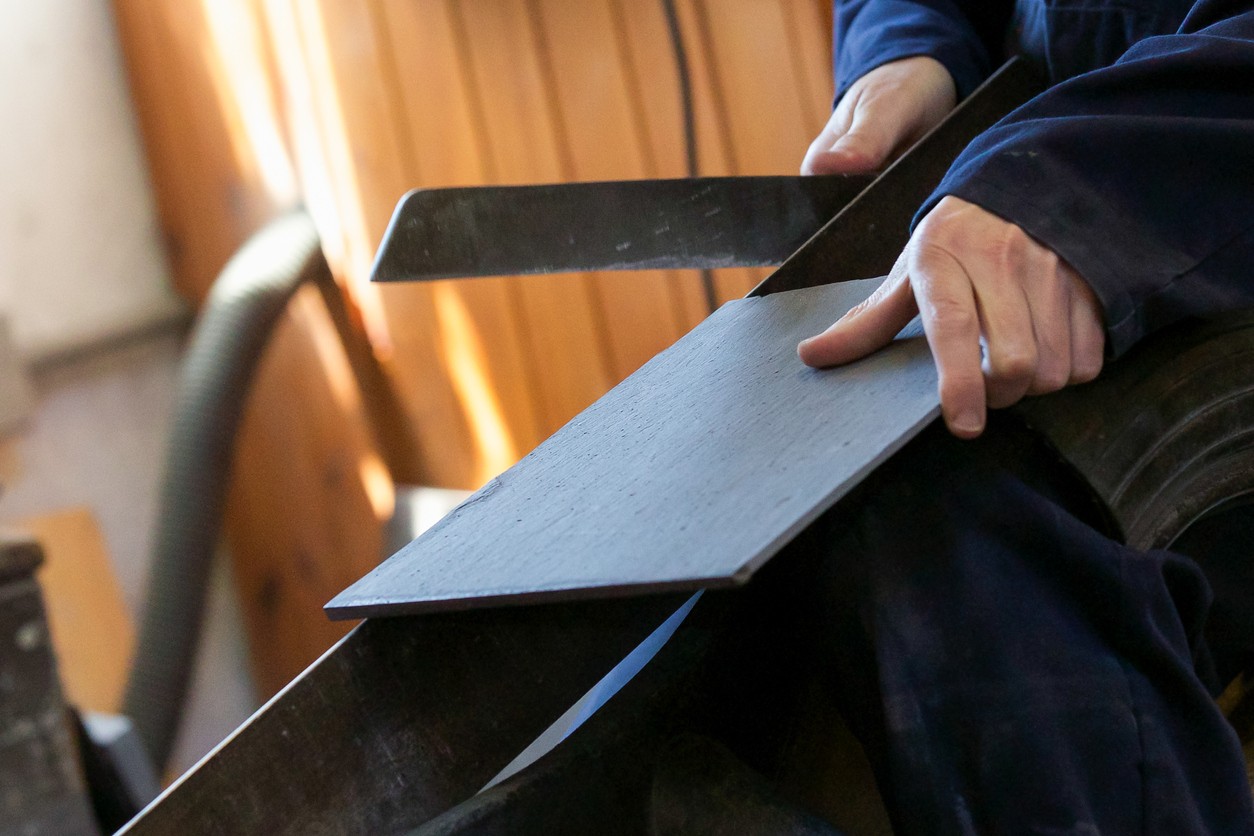
Split slates are then ready to be trimmed to a specific length for its chosen purpose. Traditionally trimming was done by hand, but nowadays machines are used to trim the slate to perfect measurements for installation.
After the process is finished, the slate will go for a final inspection where the slabs will be sorted and classified for use. Slate for roofing will be stacked onto pallets for storage. Architectural slate for panelling, tiles, counter-tops and chalkboards etc., will go through various processes before it is completed. The slate will be gauged and then honed to various finishes and may even be flamed to give it an even textured finish that removes traces of the saw blade and any irregularities.
Once the slate has been completed and stored away, it can be delivered across the country and the world for its intended purposes. Here in the UK, we have a variety of slate quarries across the country, including in Wales and the Lake District.
Different parts of the globe provide different slate varieties, as the colour is determined naturally by the geological conditions at its formation, which varies from place to place. Wales is known for its stunningly beautiful variety of blue slates.
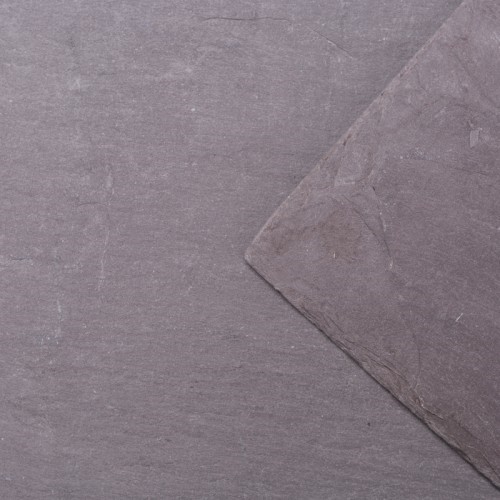
Here at UK Slate, we are specialist slate importers and exporters of natural slate from across the globe. We only source the very best globally and domestically thanks to our links to independent quarries, ensuring consistent and reliable supplies. We pride ourselves on our top-notch customer service and assure the very best support for you and your project.
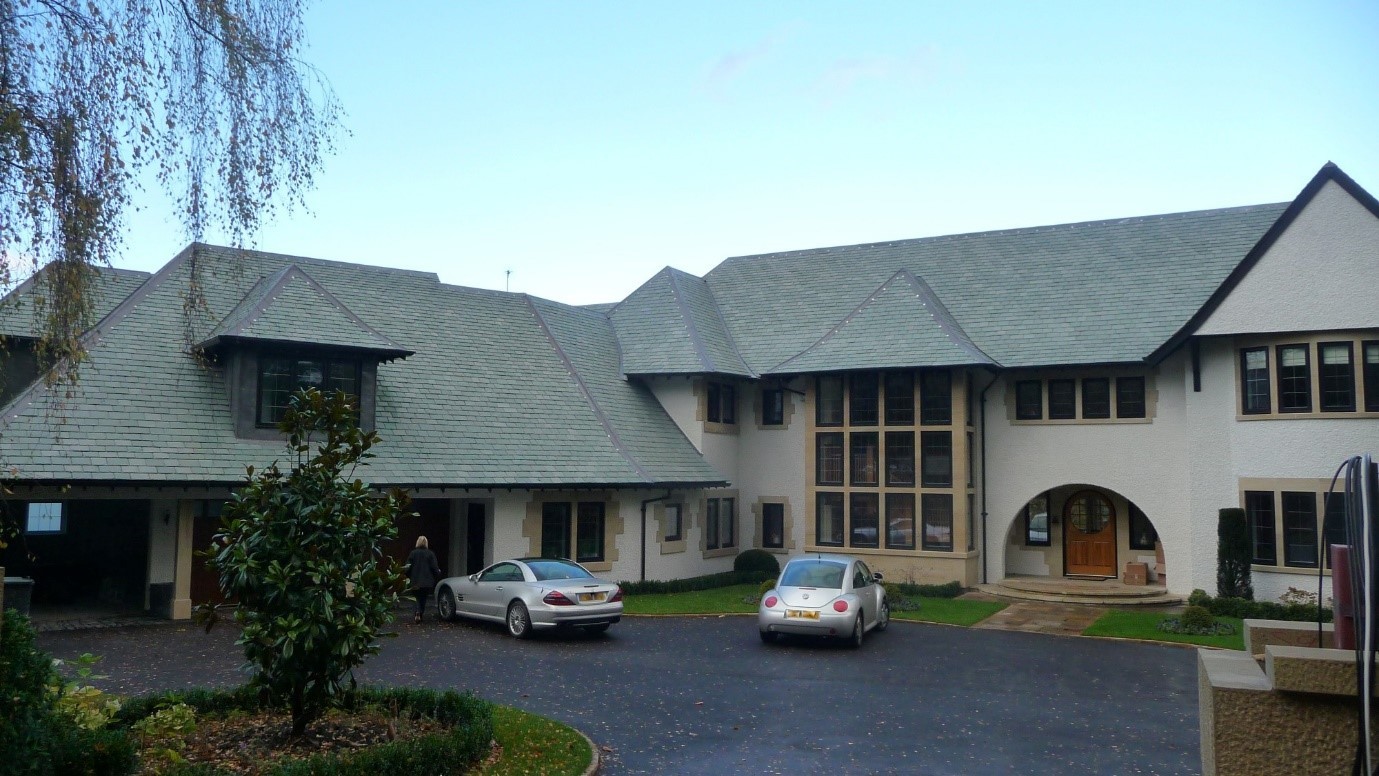
You can browse our extensive range of slates on our website. Whether you’re looking or slate roof tiles, wall tiles or floor tiles, we will have something for you. Contact us today to find out more.
When you think about the roof of your home, the last thing you want to worry about is whether it will stand the test of time. However, not all roofs will last throughout your lifetime. If you’re moving into an older property that hasn’t had a new roof for decades, it might be something you need to consider sooner than later.
Old, damaged roofs can cause damp and mould to grow in your home and could eventually lead to roof collapse if left in a dire condition. So, it’s vital you know roughly how long your roof has got left before you need to think about maintenance or an entire replacement.
Here’s what you need to know.
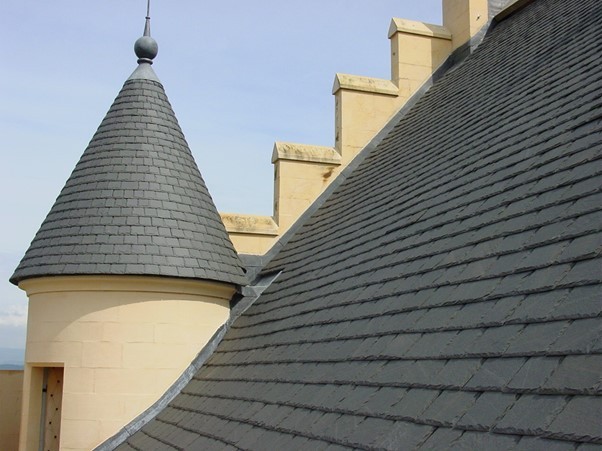
The life of your roof can be impeded or improved by a number of factors, including:
The type of roofing material used is an especially important factor when determining the lifespan of your roof. Knowing which materials provide the longest lifespan can also help you make the best choice for roofing when you need to get a new one installed.
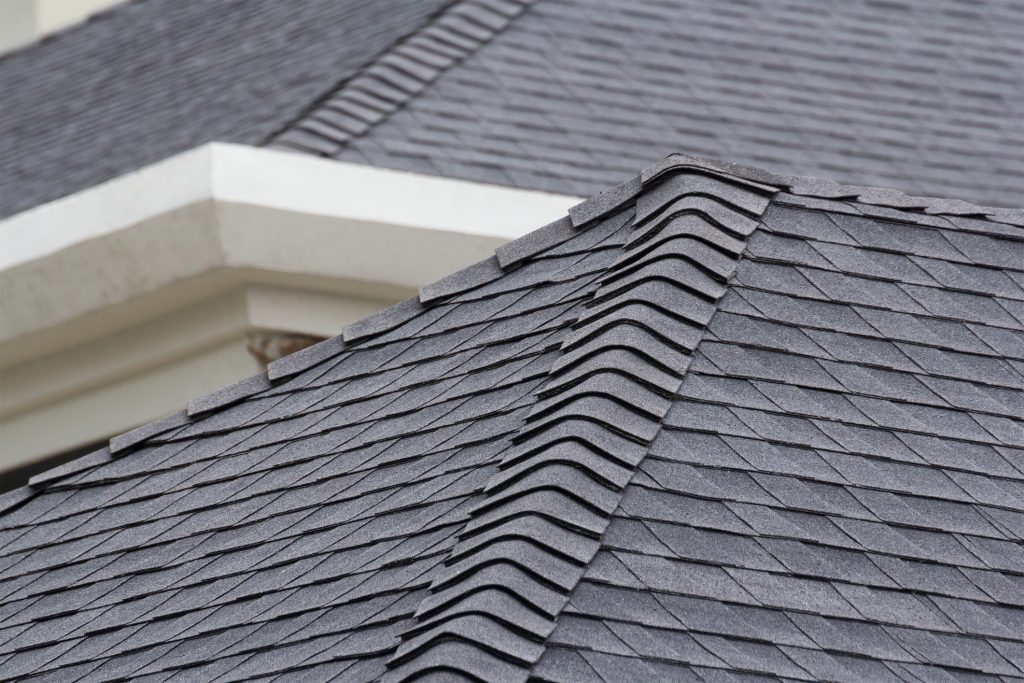
Asphalt is used to make roofing shingles and is a common roofing slates materials as is very affordable and easy to install. Asphalt roofing shingles are made from either paper fibre mats or fibreglass that has been impregnated with asphalt and coated with mineral granules.
These shingles can be expected to last from around 15 to 40 years, depending on the quality of materials chosen, the installation and the environment the roof is exposed to. You can maximise the lifespan of asphalt shingles by avoiding cheap shingles and keeping them clear of debris where possible.
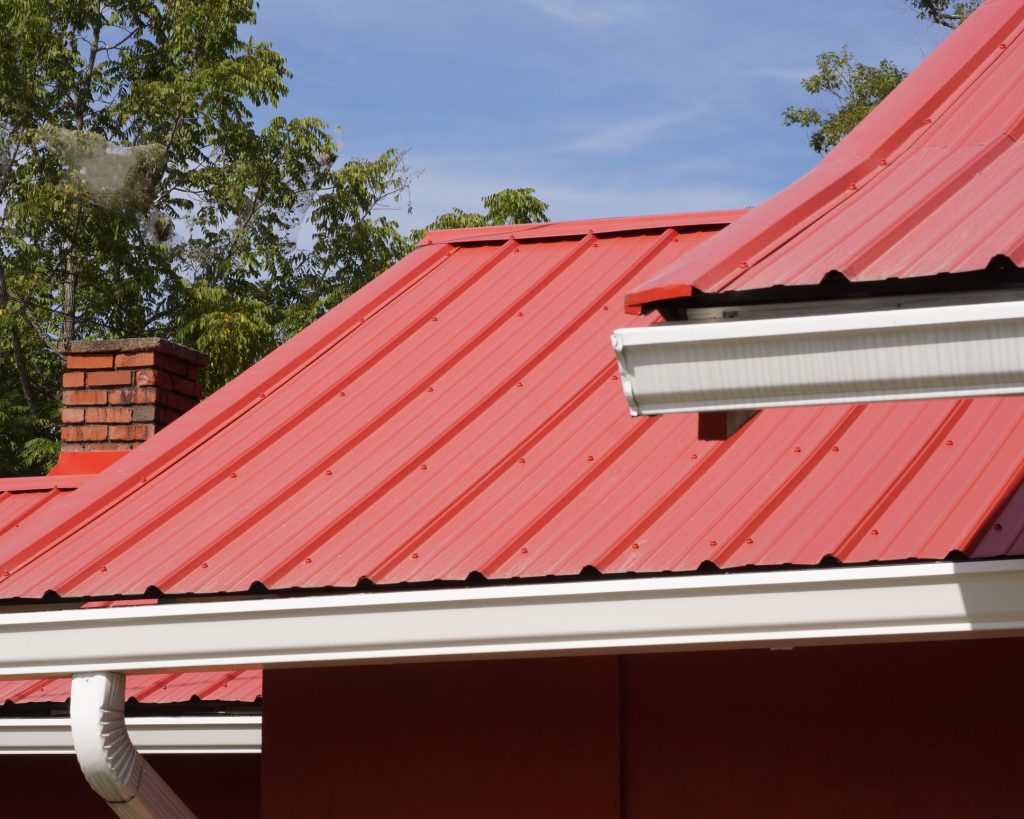
Metal roofing is a common option found in commercial, industrial, and agricultural buildings, but can also be used for housing. They are popular in areas prone to wildfire danger due to their resistance to fire damage.
Metal roofing often takes the form of roofing sheets that is laid in panels with the seams overlapping along the roof slope. These types of roofs are easy to maintain and are very durable against the elements. They have a lifespan of around 30 to 50 years, which puts it far ahead of asphalt shingles, although some homes may not be suitable for metal roofing. To increase their lifespan, they should be subjected to regular checks and maintenance to ensure the fasteners and sealants haven’t failed.
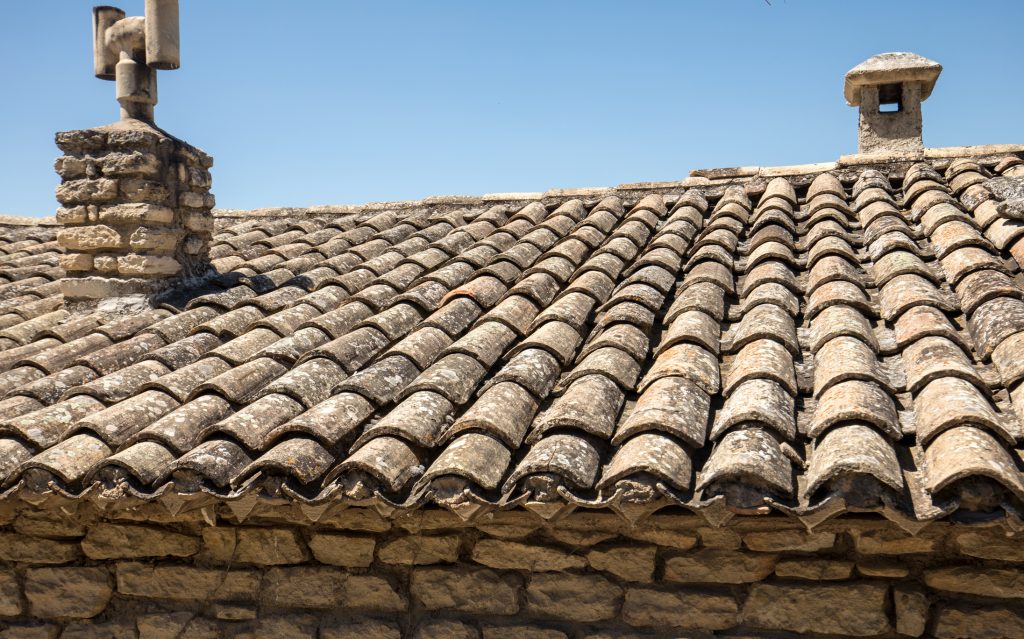
Traditional tiles are made from terracotta clay, but you can also get ceramic tiles made of fired clay. These are a popular choice due to their aesthetics, but they require sturdy roofing and framing to hold the weight.
When properly maintained, you could see clay roof tiles last for up to 100 years or more. These tiles are very hardwearing, but they are susceptible to cracks. When cracks occur, the damaged tiles should be replaced as soon as you spot them to prevent any damage from worsening.
Slate is a variation of a stone roof where the roof is covered with natural slate tiles that have been mined from quarries. Slate has a natural tendency to split into flat slabs, making it an ideal material to use for roofing. It can be more expensive than other roofing materials, but it is the most durable one of all and can last your home a lifetime.
Slate roofing tiles can easily last 100 years and far more, demonstrated by the fact that there still stand historical buildings dating back hundreds of years with their original slate roofs intact. Like the clay tiles, any broken slate tiles should be replaced as soon as possible to maintain the longevity of your roof.
Slate also has the advantage of looking truly beautiful, with the vast range of styles and the stunning natural colours that occur in the rock.
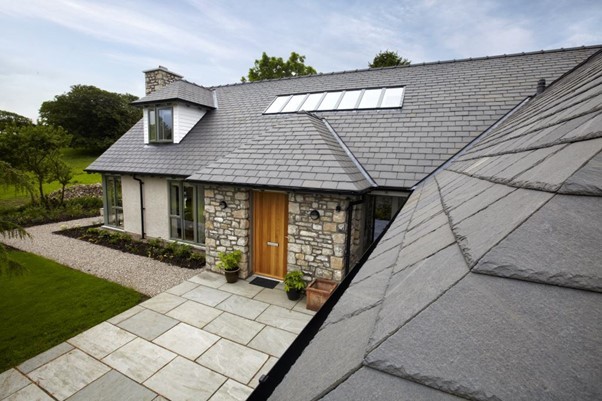
Slate is a popular material used for an array of designs for building construction, from roofing to flooring, to landscaping. As it is a natural material, slate is often hailed as one of the best materials to use in construction due to its abundance, heat-retaining properties and environmentally friendliness. Made from fine-grained metamorphic rock composed of sedimentary or volcanic ash deposits, it is a material which has been used for centuries.
Slate brings numerous benefits due to its remarkable durability and fire and water resistance, but what is it about slate that makes it so environmentally friendly?
As demand for slate has increased, suppliers have been opting to transport from abroad to source natural slates. There are various destinations around the world where natural roofing slates are transported to the UK, the most common being Spain, Brazil and China.
With this method, slates are transported via a 40-tonne articulated truck from the quarry to a designated port, where they are then shipped to the UK. Being transported via sea results in a cleaner and more efficient journey, reducing carbon emissions.
But there are also plenty of slate quarries in the UK, so they’re right on our doorstep, reducing the distance needed for transportation. At UK Slate, we are based on the edge of the Lake District, an area known for its high-quality slate. We can provide you with both UK quarried slate and slate from across the globe.
According to data from the Inventory of Carbon and Energy, which looks at the amount of energy and carbon in a building material, natural slate makes the least environmental impact. There is very little manufacturing in the slate collection process, as it is handcrafted work from the quarry.
It also produces the lowest embodied energy, the energy required for manufacturing, transportation and the use of the product and waste product. Slate has the lowest carbon footprint due to the fossil fuel used to process it.
Other materials have more complex manufacturing processes with a higher environmental impact. Ceramic tiles, for example, need high-temperature processes in furnaces, meaning they consume lots of energy that the slate process does not.
Slate tiles have a long life that can withstand adverse conditions like heat, rain and wind. With proper care and maintenance, slate roofing can last well over a hundred years. In fact, supporting timbers are more likely to deteriorate before the slate tiles themselves. Your slate roof can resist severe wear and tear and protect your home from the surroundings.
With such a long-lasting material for your home, you won’t have to worry about replacing your roof anytime soon, and you’ll lessen your environmental impact by using a material that doesn’t need frequent replacing.
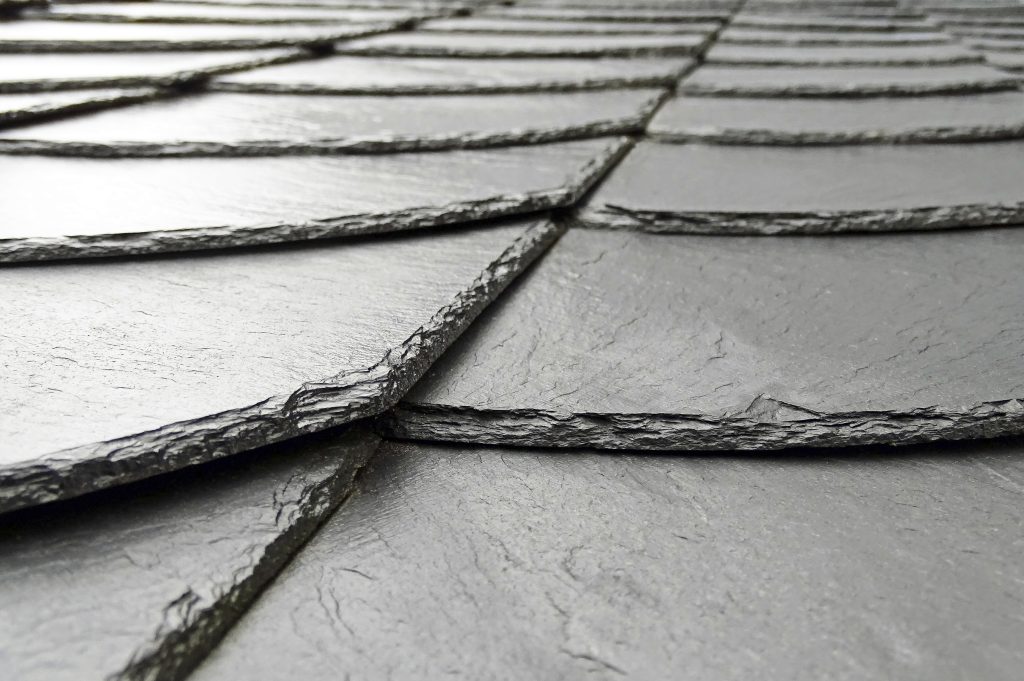
Throughout all the stages of its life span, natural slate will remain environmentally friendly. Due to this, it has become one of the best natural choices for sustainable buildings. Below, we have listed some reasons as to why natural slate is the best ecological option:
By building a roof with natural slate material instead of fibre cement, it can avoid the creation of up to 6.2 tons of CO2 emissions. This is equivalent to the pollution created by an average car over 18,600 miles (30,000km).
There are numerous reasons and benefits which add up to natural slate being one of the most environmentally friendly materials used today. Here at UK Slate, we ensure we are constantly able to source the very best slate from around the globe. We pride ourselves on meeting and exceeding your expectations. With all our years of experience, we can source you the best slate domestically and from about the globe, and we offer national and international delivery so we can get to you wherever you are.
If you would like to know more about our products and services, get in touch with us today by calling 015395 59289 or emailing info@slate.uk.com and we will be happy to help.
Slate is a versatile stone that is available in a number of different finishes including riven, honed, antiqued and tumbled to name a few. Although often a little more expensive than alternative flooring, it’s considered to be a worthwhile investment thanks to its exceptionally robust properties.
There is something beautiful and unique about slate flooring that other types of flooring simply cannot compare to. Available in a wide range of different colours, sizes and finishes, slate has become a staple in many homes and businesses across the UK thanks to its flexibility and versatility.
A lot of home and business owners choose slate because it’s durable and requires little maintenance – but this doesn’t mean that you can completely ignore it! To keep your slate floor looking bright and fresh, you do need to keep on top of maintenance, so we have put together an article looking at how to maintain and prolong your natural slate flooring for the long-term.
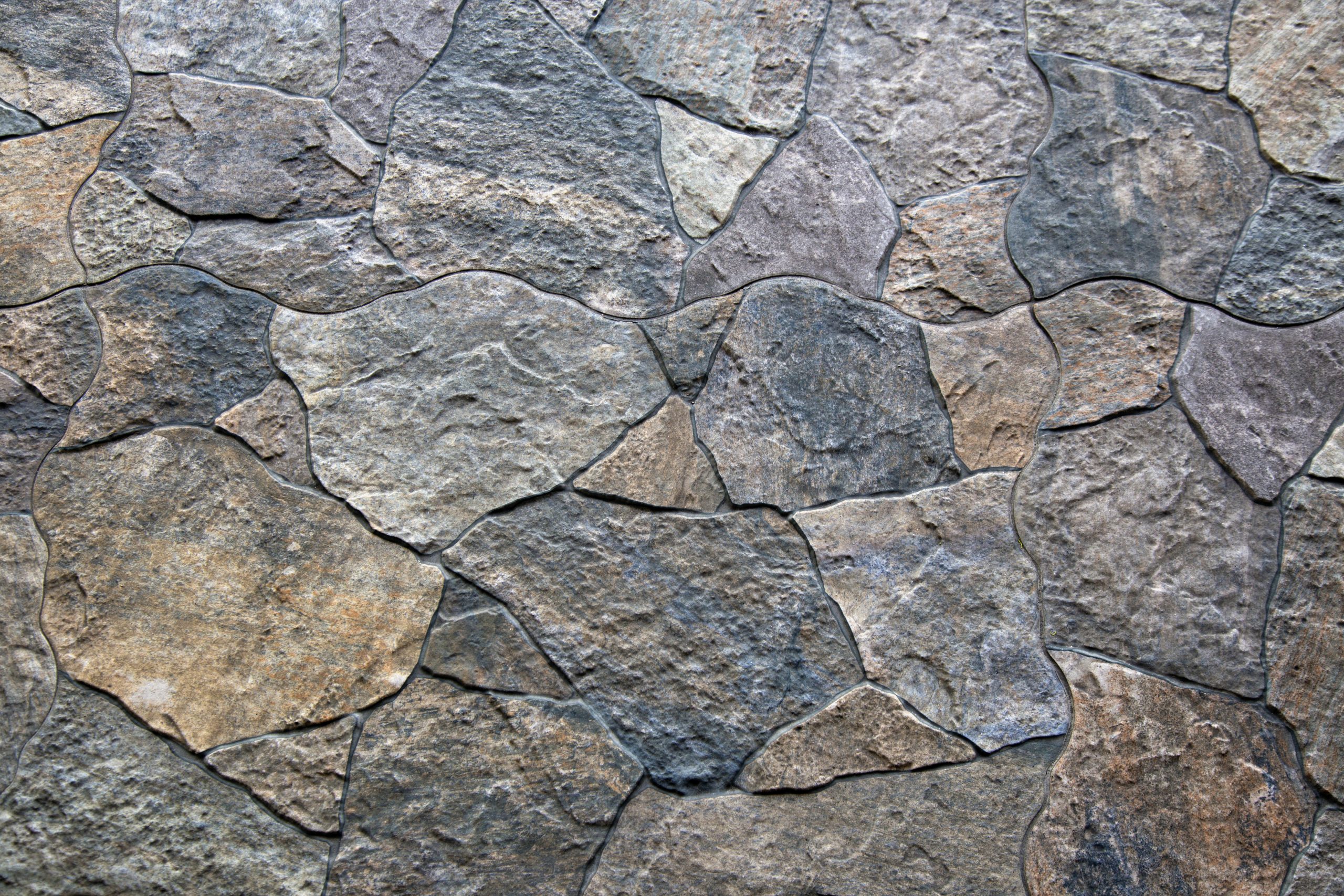
The most obvious way to keep your floor clean would be to not get it too dirty in the first place. However, we know that this isn’t always possible, so it’s essential that you take the right steps to protect it as much as possible and this is where sealing becomes extremely important!
Slate and all natural stone must be sealed with an impregnator in order to prevent staining. Although naturally very impermeable and smooth, on a microscopic level slate still has a grainy texture which will otherwise allow liquids to be absorbed. There are a variety of sealants available which can alter the appearance of your flooring, some intensifying the colours, others producing a glossy sheen.
Whilst slate floors are low-maintenance, if you’re looking to keep them in the best condition you can for the foreseeable future, we would recommend implementing a weekly care routine for your new flooring.
As a general rule of thumb, you should always try to sweep your slate flooring at least twice a week, especially in the months following installation. This is mainly down to a process that can occur called ‘spalling’ which essentially means that small pieces of the material may flake off the surface; it’s worth noting this is completely normal and will usually stop around 6 months to a year after installation.
Mopping your slate tile floor is a must on a weekly basis, and we would recommend doing so with a gentle cleanser where possible. You should always use a cleaning product that is specifically made to wash natural stone, rinse with water and then let it air-dry.
The importance of regular cleaning of your slate floor cannot be understated. When it comes to cleaning we’d recommend Lithofin Easy Care Cleaner as this is designed to work in partnership with the sealants in order to prolong their lifespan. For more stubborn dirt and stains, a stronger cleaner may be required such as Lithofin Power Clean or Wexa Multi Purpose Remover.
Where possible, you should also avoid using tough scrubbing brushes that may scratch and damage the flooring and sealant. If cared for correctly, slate flooring should last you an entire lifetime!

The team here at Slate UK have put their heads together to come up with a quickfire do’s and don’ts list for slate flooring, so always do:
And don’t:
If you would like to speak to us about the range of floor slates that we have available, please don’t hesitate to contact us. You can give us a call on 015395 59289 and we will be more than happy to help you out.
This interactive tool considers key specifications such as shape, material, dimensions, and finishing details to generate a personalised quote tailored to your needs. We offer a wide range of shape options, from classic rectangular designs to sleek, modern curves, all crafted from luxurious, high-grade slate.
This interactive tool considers key specifications such as shape, material, dimensions, and finishing details to generate a personalised quote tailored to your needs. We offer a wide range of shape options, from classic rectangular designs to sleek, modern curves, all crafted from luxurious, high-grade slate.